

Tile Club - Match Puzzle Game
GamoVation
I spent time with Tile Club - Match Puzzle Game as a light, easy-to-start puzzle game, and my first impression was that it understands the appeal of sorting matching tiles without making the opening experience feel intimidating. The basic idea is familiar: look across a board, find matching pieces, and clear them through careful choices. What makes the experience work is the small amount of pressure created by limited space and the need to notice useful matches before the board becomes awkward.
This is a free puzzle game from GamoVation, aimed at Everyone and available for devices running Android 6.0 or later. It was released on May 15, 2023, and the current version is 3.3.2. Its scale is also notable: it has passed 100 million installs, with an average rating of 4.9 from around 743 thousand ratings. Those figures do not automatically make a game right for everyone, but they do explain why it is easy to encounter when looking for a casual tile-matching option.
How the matching loop feels in everyday play
The central pleasure is simple to understand but more thoughtful to play than a quick glance might suggest. I am not merely searching for any three related tiles. I am deciding which visible group is safest to remove, which move might reveal a better option, and when it is worth preserving a tile because it could help complete another set later. That gives each short session a gentle planning layer instead of turning the game into pure tapping.
It works particularly well in small gaps during the day. I can imagine opening it while waiting for an appointment, taking a few minutes during a commute, or playing one board before bed without needing to remember a complicated story or a large collection of controls. The visual goal is immediately clear, so the game does not demand a tutorial-heavy commitment before becoming enjoyable.
At the same time, the familiar format means the quality of the moment-to-moment decisions matters more than novelty. Players who already know tile-matching games will recognize the rhythm quickly. The appeal is less about discovering a new genre and more about whether the board layout, pacing, and growing challenge keep the act of matching satisfying. For me, the strongest sessions were the ones where I slowed down just enough to plan instead of treating every available match as equally valuable.
Related News

Why WhatsApp Messenger Still Makes Everyday Communication Feel Easy

Jurassic World: The Game Is the Better Dino Tycoon for Strategic Players

Threads in Real Life: Who Should Join, Lurk, or Leave

How SHEIN Turned Shopping Into an Endless Content Feed

How to Make Fortnite Feel Smarter on Mobile

Should You Switch to Microsoft Outlook on Mobile?
Why the board encourages restraint
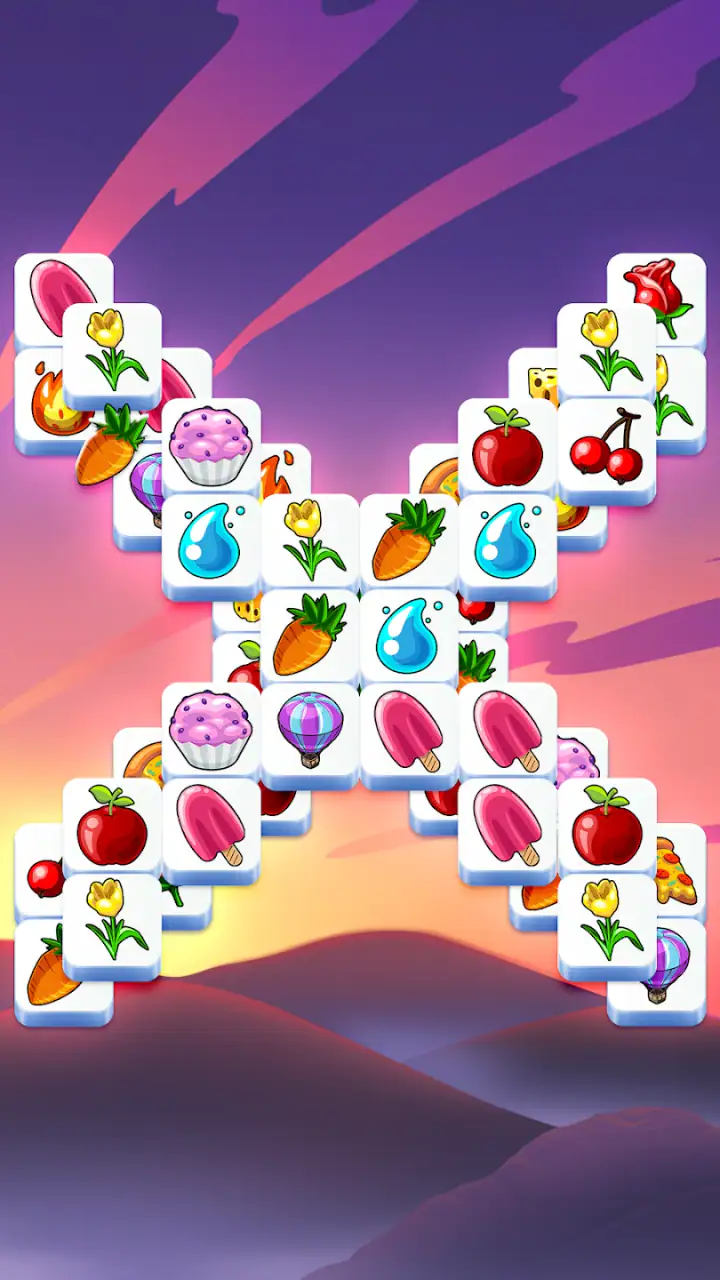
A useful habit is to inspect the whole arrangement before making the first move. The obvious match is not always the best one. Clearing a group can expose another tile, but it can also occupy valuable room in the holding area or leave several unrelated pieces competing for the same spaces. I found that a quick scan of the board reduced careless losses more effectively than rushing toward the first visible combination.
That is one of the less obvious strengths of the design: it rewards attention without requiring long calculations. A player can develop a personal routine, such as identifying pairs that are nearly buried, checking whether a move opens a new layer, and keeping the available slots flexible. This makes the game a better fit for someone who enjoys small tactical choices than for someone who wants a completely automatic matching experience.
Another practical tip is to avoid spending every useful move immediately when the board is crowded. A match that looks convenient may remove the only visible route to a more important set. I would not call this a deep strategy game, but it does offer enough board awareness to make careless play feel different from deliberate play. That distinction is what gives repeated rounds some staying power.
Gallery
Progress feels relaxing until the board pushes back
The early experience is approachable, while later play naturally feels more demanding because the cost of a poor decision becomes clearer. That change is important for a free casual game: if every board were equally simple, the matching loop would lose its purpose quickly. Here, the interest comes from managing the tension between clearing tiles and preserving room for future choices.
There is also a psychological trade-off in this format. A player can feel close to success and still create a problem with one rushed move. That is satisfying when the solution is found through better observation, but frustrating when the result seems to depend on circumstances outside the player’s control. I prefer playing with the expectation that a round may require patience rather than assuming every attempt should be effortless.
For an everyday scenario, I would use it as a short reset after a demanding task. I could play one round, focus on the board rather than notifications or work, and stop when the session no longer feels refreshing. It is less suitable when I want a long narrative journey, a social activity, or a puzzle with a single carefully authored solution. Its strength is the repeatable board routine, not emotional storytelling or complex world-building.
Spending, pressure, and how fair the experience feels
The important purchase context is straightforward: the game is free to download, while in-app purchases range from $0.99 to $99.99 per item. That range tells me the game has optional spending built into its business model, but it does not by itself explain exactly how each purchase affects play. I would therefore approach the shop carefully, especially if the device is shared with children or if I am trying to keep a casual game completely cost-free.
The Everyone content rating makes the game broadly accessible, but an age rating is not the same thing as a spending guarantee. Before starting, I would use the device’s purchase controls and avoid treating optional offers as part of the basic promise of a free puzzle game. That is sensible for any game with purchases, and it matters more when the game’s short sessions make it easy to return repeatedly throughout the day.
From a fairness perspective, I look for a clear separation between my own decisions and any pressure to pay. The matching itself should remain understandable: I need to know whether a failed round came from a poor move, a lack of planning, or a purchase prompt that changes the situation. Tile Club gives me a familiar skill-based puzzle framework, but I would still judge the overall value by how comfortable I feel ignoring the shop rather than by the existence of purchases alone.
When progress pressure becomes the real issue
Short puzzle rounds can create a subtle spending temptation because a player is often close to completing a board. After investing attention in a difficult arrangement, the idea of using a paid option can feel more attractive than simply starting again. My advice is to decide in advance whether this is a no-spend game for you. That simple boundary prevents a frustrating round from making the decision on your behalf.
I also recommend treating a failed attempt as useful information. If the board became crowded because I selected isolated tiles too early, I can change that habit on the next try. If I immediately pay whenever a round becomes uncomfortable, I lose the opportunity to learn the game’s decision pattern. For me, the better value comes from improving my choices and keeping purchases optional, not from trying to remove every moment of resistance.
This is where the game differs from a purely offline puzzle book or a one-time paid title. A traditional puzzle book has no recurring shop decision once purchased, while a free mobile game can be more convenient and easier to sample but may invite additional spending. Tile Club is a good match for someone who values free access and quick sessions, provided that person is comfortable setting personal limits around optional purchases.
Competitive fairness and the right comparison
I would not choose this game primarily for competitive ranking or direct player-versus-player fairness. Its appeal is personal board management: finding matches, controlling space, and trying to improve my own decisions. That makes the relevant comparison less about esports-style balance and more about whether the puzzle gives me a fair chance to understand why a move succeeded or failed.
Compared with a match-three game, this tile format feels more deliberate and less driven by chain reactions. I spend more time scanning and preserving options, whereas a match-three alternative often emphasizes quick swaps and cascading effects. Compared with a crossword or logic-grid puzzle, Tile Club is easier to enter and less dependent on language, but it usually offers less intellectual depth and less of a sense that one exact answer has been deduced.
Compared with a premium puzzle game, the free entry is a major advantage for someone who wants to try the format without committing money first. The trade-off is that the purchase range means I would pay closer attention to the game’s spending environment than I would with a one-time purchase. For a player who wants a calm, self-contained experience with no commercial interruptions or optional transactions, a paid alternative may be the better choice even if it offers fewer short-session conveniences.
Who should install it, and who should skip it?
I would recommend it to casual puzzle fans who like visual matching, modest planning, and repeatable rounds. It is also a sensible choice for someone who wants a game that can be understood quickly but still rewards a little patience. The broad age rating and low entry cost make it approachable for households, although I would still keep purchase protections in place on any shared device.
I would be more cautious about recommending it to players who dislike repetition. The core activity remains matching tiles, so anyone seeking character development, exploration, a large story, or a radically changing puzzle system may lose interest. I would also skip it if my main goal were a fully purchase-free premium experience or a competitive game where the central question is how I compare with other players.
It is not automatically the best choice for every puzzle fan either. Someone who enjoys wordplay should look toward a word game; someone who prefers spatial manipulation may get more from a traditional block puzzle; and someone who wants deep deduction may find a logic title more rewarding. Tile Club occupies a narrower but useful space: approachable visual puzzles with enough tactical friction to make each board more than a reflex exercise.
What I would check before committing time or money
The version number, 3.3.2, gives me a practical reason to keep the app updated when an update is available, particularly because puzzle games depend on smooth touch response and reliable board presentation. Its minimum operating system requirement of Android 6.0 or later also means that compatibility should be checked before installation on an older device. These are small details, but they matter when the goal is a quick game that should start without technical friction.
I would also decide where the game fits in my routine. If I use it as a five-minute break, the simple loop is an advantage. If I expect it to occupy an entire evening, the repeated structure may begin to feel thin. That difference in expectation is more important than the impressive install figure or high average rating. Popularity can indicate broad appeal, but it cannot tell me whether I personally enjoy repeating the same kind of decision over many sessions.
There are a few questions I would keep in mind while trying it. Will I enjoy the board decisions without needing rewards or purchases to stay interested? Can I accept restarting after a poor sequence rather than treating every round as something that must be rescued? Do I want a free game with optional spending, or would I rather pay once for a more contained experience? My answers determine the value more than the download price alone.
I would not assume that a free installation means every useful convenience is free, and I would not assume that a purchase is necessary simply because the game includes purchases. The responsible approach is to play normally first, learn the board habits, and only then decide whether any optional item genuinely improves the experience. If the answer is no, the game can remain a free casual pastime.
My trust verdict after weighing the trade-offs
My overall view is positive, with a clear condition: I would recommend Tile Club as a free, accessible tile puzzle, not as a substitute for a deep strategy game or a guaranteed purchase-free premium experience. GamoVation has chosen a format that is easy to understand, portable, and capable of creating small moments of tension through board management. The game’s best quality is that a careful player can make the matching loop feel more thoughtful than its simple premise suggests.
The main friction is not the basic puzzle idea; it is the need to manage expectations around repetition and optional spending. The purchase range reaches $99.99 per item, so I would never hand the device to a child without appropriate purchase restrictions. I would also avoid playing when I am tired and likely to make impulsive decisions, because a short, almost-successful round can make spending feel more urgent than it really is.
My trust verdict is to try it freely, play deliberately, and keep the shop separate from your idea of progress. If you enjoy scanning a board, protecting your available space, and learning from a failed arrangement, it has enough substance to earn a place in a casual puzzle rotation. If you want a one-time, self-contained purchase, a story-led adventure, or a highly competitive experience, I would choose something else instead.
In the end, the game works because it makes a small task feel just strategic enough. I can pick it up without preparation, understand the objective immediately, and still find room to improve my choices. That is a modest ambition, but it is the right one for this type of mobile puzzle. As long as I treat the free access as an invitation to test the experience rather than a reason to spend automatically, Tile Club is an easy recommendation for relaxed tile-matching sessions.
FAQs for Tile Club - Match Puzzle Game
What is the main objective of Tile Club - Match Puzzle Game?
Tile Club - Match Puzzle Game challenges players to match and clear tiles from the board to advance through various levels. The primary goal is to strategically match tiles to achieve specific level objectives while managing limited moves or time. It’s a brain-teasing puzzle game designed to test your problem-solving skills.
Is Tile Club - Match Puzzle Game free to play?
Yes, Tile Club - Match Puzzle Game is free to download and play. However, it may offer in-app purchases for players who wish to enhance their gaming experience. These purchases can include additional lives, power-ups, or ad-free gameplay. It's entirely optional and not necessary to enjoy the game.
What platforms is Tile Club - Match Puzzle Game available on?
Tile Club - Match Puzzle Game is available for both Android and iOS devices. You can easily find and download it from the Google Play Store for Android or the Apple App Store for iOS. Ensure your device meets the app's system requirements for optimal performance.
Does Tile Club - Match Puzzle Game require an internet connection?
Tile Club - Match Puzzle Game can be played offline, making it convenient for users who may not always have internet access. However, certain features, like leaderboards or syncing progress across devices, may require an internet connection. Playing online can enhance the overall experience.
Are there any age restrictions for playing Tile Club - Match Puzzle Game?
Tile Club - Match Puzzle Game is suitable for players of all ages, making it a family-friendly option. It features engaging puzzles without explicit content, ensuring it's appropriate for younger audiences. However, parental guidance is recommended for in-app purchases to prevent unintended spending.
Pros
- Engaging puzzles with increasing difficulty.
- Visually appealing graphics and animations.
- Regular updates with new levels.
- Offline play available for convenience.
- User-friendly interface and controls.
Cons
- In-app purchases can become costly.
- Limited energy system restricts playtime.
- Ads can interrupt gameplay flow.
- Requires frequent updates for new content.
- Some levels may seem repetitive.


